Every autumn, Crete's vineyards go through the most intense stretch of their year: the grape harvest, known locally as the "trygos." It's the point where an entire year of work in the vineyard — pruning, irrigation, watching the weather — compresses into a few frantic weeks, with every winery racing the clock against the ripeness of the fruit. For a visitor, harvest season is arguably the most authentic window into Cretan agritourism: not a curated show, but the island's wine country doing the one thing it actually exists to do.
If you're researching the grape harvest in Crete — when it happens, what it actually involves, and how you can get close to it as a visitor right now — this guide covers all of it. We'll be upfront from the start: AgroVino doesn't currently have a bookable grape harvest experience on the platform. What we do have are three wineries near Heraklion that take direct bookings for wine tastings during exactly this window — a different thing, but one that puts you in the same place at the same time of year.
In the Cretan countryside, harvest has traditionally been more than agricultural work — it's close to a community event. Neighboring families would help pick each other's plots in turn, closing the day with a shared meal once the crates were in. Plenty of small, family-run wineries still carry a version of that spirit, even though larger estates now bring in hired picking crews. That context is part of why harvest season carries so much weight for people who grew up around vineyards here — and why a growing number of visitors want to experience some version of it themselves.
When Does the Grape Harvest Happen in Crete
There's no fixed date. Harvest timing follows the grape variety and that year's weather, not the calendar. As a general rule, Crete's harvest window runs from late August through mid-to-late October, in two rough waves:
- White varieties come first. Vidiano, which ripens earlier, is typically picked from late August through mid-September. White grapes are harvested early to preserve acidity — leave them on the vine too long and the resulting wine loses its freshness.
- Reds follow later. Kotsifali and Mandilaria need more time on the vine to ripen, so they're usually picked from late September through mid-October. The exception is Liatiko, an early ripener (its name comes from the Greek for July) that is often picked as early as August.
A given year's weather can shift that window by two or three weeks in either direction. A hot, dry year accelerates ripening and pulls harvest earlier; a wetter year can delay it, or force a rushed picking before humidity causes rot in the grapes. That's also why no winery can give you an exact date months in advance — at best, a two-to-three-week estimate that only firms up a few days out, once the winemaker tastes the grapes in the field and decides they're ready.
In practice, if you're planning a trip specifically to catch the harvest, the safer bet is booking around a window — roughly late September — rather than pinning your whole trip to one date. Even then, no winery can guarantee it will be picking on the exact day you show up: harvesting a single parcel of vines can be a one-day job somewhere inside a three-month season.
Why "Harvest" Isn't Bookable on AgroVino Yet
Our site already lists "Τρύγος" (Harvest) as an experience category alongside wine tasting and the rest — the platform is built to support these listings once they exist. Right now, though, none of our partner wineries have published one. The reason is straightforward: opening up an actual harvest to visitors takes logistics most wineries haven't built out yet — insurance, a fixed schedule, staff who can guide guests through a vineyard at the exact moment the crew is racing to bring in fruit before the weather turns. We're saying this plainly because we'd rather tell you what doesn't exist yet than let an SEO-friendly headline promise something we can't deliver.
What a Grape Harvest Experience Typically Includes
At wineries that do open their harvest to visitors — not yet the norm in Crete, but a growing practice elsewhere in Greece and Europe — a typical experience usually includes:
- Hands-on picking — cutting bunches with pruning shears alongside a family member or vineyard crew, usually in the early morning before the sun gets high. It's manual labor, bent over between the rows, not a stroll.
- Traditional grape treading, where the practice still survives — not as part of actual production anymore (nearly every winery presses mechanically today), but kept alive as a demonstration, mostly at wineries with steady visitor traffic.
- A post-harvest meal — traditional Cretan dishes, often paired with wines from the estate's previous vintages.
Worth being clear about one thing: harvest isn't staged for visitors — it's real production under real time pressure, and the winery's priority is getting the crop in, not the tour. Any winery that opens this up builds the visit around its actual work, not the other way around.
Where to Get Close to the Harvest in Crete Right Now
We want to be direct here: there is currently no bookable grape harvest experience available through AgroVino. None of our partner wineries offer organized harvest participation as a bookable listing yet, and we won't pretend otherwise just because you landed on a harvest guide.
That doesn't mean you can't get close to the season, though. Three of the wineries we work with near Heraklion are in full swing during exactly these months: DAF Wines, Digenakis Art Winery and Diamantakis Winery. A tasting at any of them in September or October isn't a harvest experience, but it's the closest, most honest look you'll get at a working winery during its busiest stretch of the year: crates of grapes moving in and out, a winemaker with less time to chat than usual, the smell of fresh must in the air of the winery itself.
DAF Wines — a family-run winery near Heraklion offering three experiences depending on how much time you have:
- A Taste of Crete: Wine Tasting at a Family Winery Near Heraklion — a short introductory tasting.
- Flavors of Crete: Wine Pairing Experience at a Family Winery — wine paired with local small plates.
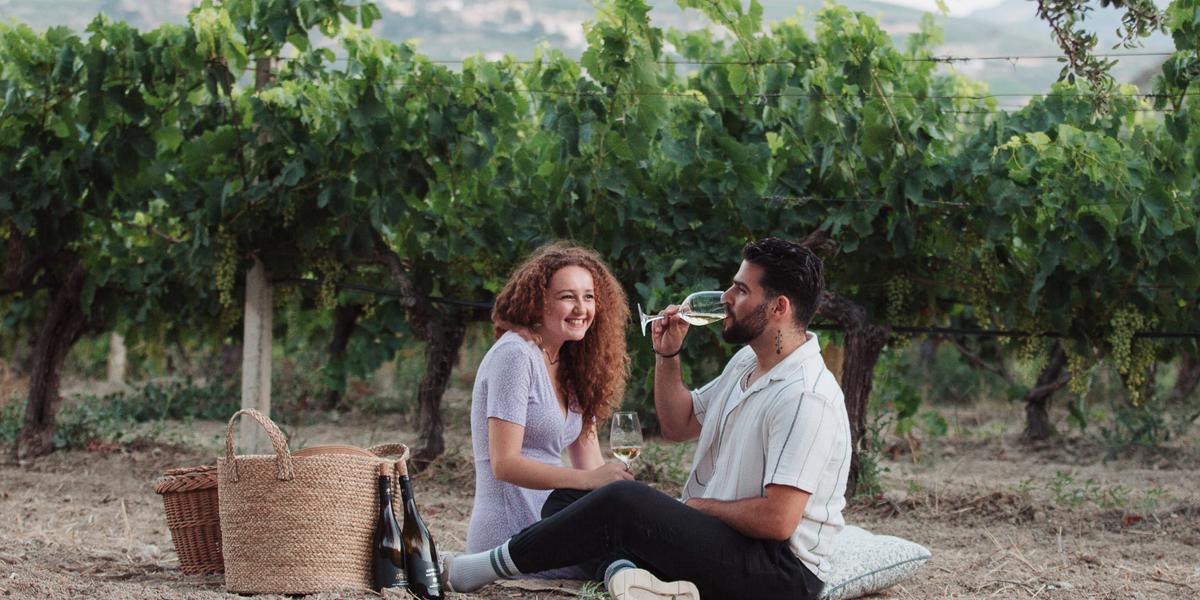
- Crete Vineyard Picnic with Cretan Food & Wine — a slower option, seated among the vines.
Digenakis Art Winery:
- Tasting Experience at the Digenakis Art Winery — a classic guided tasting.
- Wine Tasting & Premium Cretan Food Experience at Digenakis Art Winery — a full meal paired with wines.
Diamantakis Winery:
- Taste the Wines - Tasting of 5 Cretan Wines — five Cretan wines, a good first step if Cretan wine is new to you.
- Taste the Culture - Wine & Food Pairing with 6 Cretan Wines — six Cretan wines paired with local food.
- Taste the Difference - Tasting of 8 Wines: Tradition & Experimentation — eight wines, from traditional styles to more experimental ones; the most extensive of the three.
If you book one of these within the harvest window, ask the winery directly when you book whether there'll be picking activity that particular day — it's not guaranteed (it depends on that day's harvest schedule), but it's worth asking.
Planning a Trip Around Harvest Season
Since there's no fixed date, the most realistic way to plan a trip around Crete's grape harvest is:
- Book a window, not a day. A 5–7 day trip somewhere between late September and mid-October gives you the best odds of landing during active picking, without betting the whole trip on one specific date.
- Reach out to the winery a few days ahead, not months ahead, if you want specifics on whether harvest activity is likely on your visit day — winemakers usually only know with real accuracy about a week out, not sooner.
- Don't build the whole trip around harvest alone. Even if you miss the exact picking day, a tasting during this window is still one of the liveliest times of year to visit a winery — must in the air, staff running at full pace, the estate visibly mid-season.
Tips for Visitors
If you find yourself at a winery during harvest season — whether at a tasting or, down the line, an actual harvest experience — a few practical notes:
- Clothing and footwear — closed, comfortable shoes (not sandals), light but long clothing that protects against sun and vine branches. A hat and sunscreen are non-negotiable, especially during the early-morning picking hours.
- Physical demands — if you're actually picking, it's manual outdoor labor, not a walk-through. No special fitness required, but don't expect the pace of a relaxed tasting.
- Traveling with kids — depends heavily on the winery and the activity. A tasting with a picnic works fine for families; actual harvest participation, where it exists, tends to suit older kids and adults better given the sun exposure and physical effort. Always check with the winery before booking.
- Realistic expectations — harvest isn't a photogenic scene staged for visitors, it's real work under real time pressure. That's exactly what makes it compelling, but it also means schedules can shift at the last minute depending on weather or how ripe the grapes are.
Book Your Wine Tasting
Until a real, bookable grape harvest experience exists on our platform, the most authentic way to get close to the season is a tasting at an active winery during its busiest stretch of the year — September or October. Every experience above can be booked directly through AgroVino — no fees hidden in the final price, direct contact with the winery, and real-time confirmation. See all wine tasting experiences in Crete →